Ontario winters are cold and dry. Once your furnace starts running daily, indoor moisture drops fast. Without anything to balance it, you feel it in your skin, your sleep, and even in your home’s wood floors and furniture.
A whole-home humidifier helps but only when it is properly maintained. A unit that has been overlooked can spread mineral dust, grow mold, or simply stop adding enough moisture to make a difference.
This blog covers what to check, when to check it, and what to watch out for before and during the heating season in the GTA.
Most people notice the effects of dry air before they connect them to humidity. Common signs that your indoor humidity is too low include:
The ideal indoor humidity level for an Ontario home in winter is between 30 and 45 percent. Below 30 percent, dry air symptoms become noticeable for most people. Above 50 percent, condensation builds on windows and mold risk increases.
A well-maintained whole-home humidifier keeps your home sitting comfortably in that range all winter long.
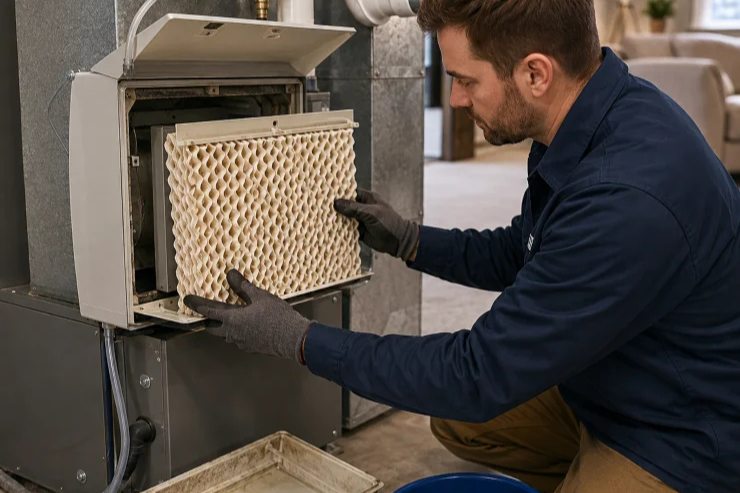
The water panel, also called the evaporator pad or humidifier filter, is the core component of a bypass or fan-powered whole-home humidifier. Water flows over it, and the furnace airflow pulls moisture from the wet surface into your home.
Over time, minerals from your water supply collect on the panel. In the GTA, where tap water has a moderate to high mineral content, this buildup happens faster than most homeowners expect. A clogged panel cannot absorb water properly, which means the humidifier runs but produces very little moisture.
How often to replace the water panel:
| Home Condition | Recommended Replacement |
| Average GTA home, average water hardness | Once per heating season |
| Hard water or high mineral content | Every 1 to 2 months during heating season |
| Humidifier running daily through a long winter | Mid-season check recommended |
| Visible crust, discolouration, or blockage | Replace immediately |
Replacing the water panel is straightforward. Turn off the humidifier and the water supply first, remove the panel housing, slide out the old panel, and slide a new one in. Most panels are inexpensive and widely available at hardware stores across Toronto and the GTA.
If the panel looks white, crusted, or feels rigid and clogged, it is past due for a change.
The water panel is not the only place minerals accumulate. Hard water scale can also build up in:
A blocked distribution tray means water is not spreading evenly across the panel, which reduces moisture output even with a fresh panel installed. A blocked drain line means water backs up and sits in the unit which creates conditions for mold.
Check these components when you replace the water panel. A warm water rinse and a soft brush clear most mineral buildup without any harsh chemicals. A mild vinegar solution works well for stubborn scales.
Most whole-home humidifiers have a humidistat, a dial or digital control that lets you set your target humidity level. Getting this right matters more than most homeowners realise.
A simple guide for GTA homes:
| Outdoor Temperature | Recommended Indoor Humidity |
| Above 0°C | 40 to 45% |
| -10°C to 0°C | 35 to 40% |
| -20°C to -10°C | 30 to 35% |
| Below -20°C | 25 to 30% |
The reason humidity needs to come down during the coldest days is condensation. When it is very cold outside and humidity inside is set too high, moisture collects on windows, inside wall cavities, and around window frames. Over time, that moisture causes mold and can damage walls.
If you notice condensation forming on the inside of your windows in winter, lower the humidistat setting by five percent and check again in a day or two.
A whole-home humidifier uses a constant water supply during the heating season. That means a small problem can turn into a persistent one if it is not caught early.
Check around the humidifier unit for:
Leaks are most often caused by a loose water supply connection, a cracked drain line, or a blocked drain that forces water to back up and overflow. Most of these are simple fixes when caught early.
Mold inside a humidifier is a more serious issue. If the unit has been sitting with standing water or has not been cleaned between seasons, mold can grow on the internal components and get distributed through your ductwork every time the furnace runs. This is one of the clearest reasons why end-of-season cleaning matters as much as start-of-season preparation.
Timing your maintenance around the heating season makes it easier to stay on top of without missing anything.
Before heating season starts (September to October):
During heating season (November to March):
At end of heating season (April):
Skipping the end-of-season shutdown is where most problems start. A humidifier left wet through summer is a perfect environment for mold to develop before the next heating season begins.
Most whole-home humidifier maintenance is straightforward. Here is a simple guide:
Homeowners can usually handle:
Worth calling a professional for:
A whole-home humidifier is one of the most effective things you can do for comfort during an Ontario winter. But it only works well when it is maintained. A clogged water panel, a blocked drain, or a unit that was never cleaned at the end of last season can make the difference between a system that actually helps and one that is running in the background doing very little.
Servicing your humidifier before the heating season and keeping an eye on it through the winter is a small effort that pays off every day from November through March. If you are not sure when your humidifier was last properly cleaned or whether it is working the way it should, Universal Duct Cleaning can take a look during your seasonal HVAC service and give you a clear picture of where things stand.
Q1: How often should a whole-home humidifier water panel be replaced?
For most GTA homes, once per heating season is the standard. Homes with hard water or a humidifier running heavily through a long winter may need a mid-season replacement. If the panel looks crusty or discoloured, replace it right away.
Q2: What indoor humidity level is right for a Toronto home in winter?
Between 30 and 45 percent is the comfortable range for most Ontario homes. Adjust down during the coldest days to prevent condensation on windows. If you see moisture collecting on glass, lower the humidity by five percent.
Q3: Can a dirty humidifier affect my duct system or air quality?
Yes. A humidifier with mold growth or heavy mineral buildup distributes those particles through your ductwork every time the furnace runs. Keeping the unit clean is part of maintaining good air quality across the full HVAC system, including your air ducts.
Q4: My humidifier is running but the air still feels dry. What is wrong?
The most common cause is a clogged water panel that can no longer absorb water properly. Check the panel first and replace it if it looks scaled or blocked. Also check that the water supply valve is fully open and that the distribution tray is not clogged.
Q5: Should humidifier maintenance be done at the same time as duct cleaning?
It is a good time to coordinate both. When a technician is already working on your HVAC system for air duct cleaning in Toronto, having the humidifier inspected at the same visit saves time and ensures the full system is in good shape going into the heating season.
Universal Duct Cleaning serves Toronto, Brampton, Mississauga, Vaughan, and the full GTA. Call for a free quote.
Book a free quote with Universal Duct Cleaning Inc. No pressure, no hidden fees.