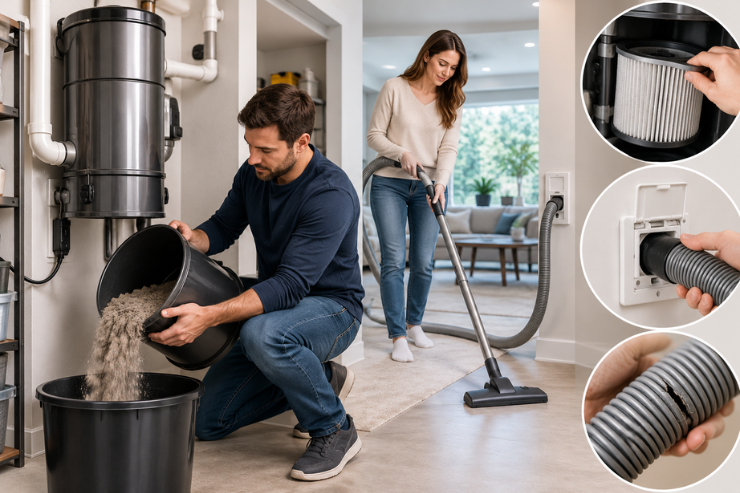
Most homeowners with a central vacuum system use it regularly but rarely think about maintaining it. And that is understandable, the system is built into the walls, the canister is tucked away, and it just keeps working.
Until it does not. And the suction drops, cleaning takes longer, something feels off. In most cases, the fix is simple, the system just needs attention it does not get often enough.
This blog answers your question, based on how your household uses the system.
There is no universal rule for how often a central vacuum system needs cleaning. A single-person condo and a five-bedroom home with two dogs have very different demands on the same type of system.
Here is a simple guide based on household type:
| Household Type | Canister Check | Filter Check | Full Review |
| One to two people, no pets | Every 4 to 6 months | Every 6 months | Every 2 to 3 years |
| Family of three to four | Every 2 to 3 months | Every 3 to 4 months | Every 2 years |
| Pets or allergy sufferers | Every 4 to 6 weeks | Every 2 to 3 months | Annually |
| Large home or high usage | Every 4 to 6 weeks | Every 2 to 3 months | Annually |
Use this as a starting point. If suction feels weaker than usual, check the canister and filter first, even if it is not time yet on your schedule.
The canister collects everything the system picks up like dust, debris, pet hair, fine particles. When it gets too full, the system has less room to work with and suction drops noticeably.
A good rule is to empty the canister when it reaches two-thirds full, not when it is packed to the brim. Waiting until it overflows means the system has already been working harder than it needs to.
When you empty the canister:
If your system uses bags instead of a canister, replace the bag at the same frequency. A full bag has the same effect on suction as an overfull canister.
The filter is what stops fine dust and particles from being pushed back into your home’s air. Over time, it clogs. When it does, suction drops and the motor works harder to compensate.
Most central vacuum filters need to be cleaned or replaced every three to six months depending on usage. Homes with pets or allergy-sensitive residents should check filters more often, every two to three months is a sensible habit.
When checking the filter:
A clean filter makes a noticeable difference in how well the system performs. It also protects the motor from overworking.
The hose travels from room to room and takes more physical wear than any other part of the system. Bends, cracks, and loose connections all reduce suction and they are easy to miss.
Every few months, run a quick check:
If suction drops suddenly and the canister and filter are both fine, the hose is the next place to check. A blocked hose is easy to diagnose, disconnect it from the unit and check airflow directly from the tubing inlet in the wall.
You do not need any special equipment to test suction. Here is a simple method:
Compare suction across different inlets in the home. If one inlet feels noticeably weaker than others, there may be a partial blockage in that section of tubing.
If suction is weak across all inlets and the canister and filter are clean, it is worth having the system inspected. Blockages deeper in the tubing or a motor that is losing performance both need professional attention.
Most central vacuum maintenance is straightforward and something homeowners can manage themselves. But there are situations where a professional inspection is the right call:
A professional can clear blockages deep in the tubing, inspect the motor, check the electrical connections, and confirm the full system is working the way it should. For older or heavily used systems, a service every one to two years is a sensible investment.
If you are not sure where to start, this schedule works for most GTA households:
A central vacuum system is a long-term investment in your home. With basic upkeep emptying the canister, keeping the filter clean, and checking the hose regularly, most systems run smoothly for years without any issues.
When something does feel off, the fix is usually simple if it is caught early. And for older or heavily used systems, a professional inspection every year or two keeps the system performing the way it was built to. If you’re looking to have your Central Vacuum System checked and cared for properly, Universal Duct Cleaning has been helping homeowners across Toronto to keep their systems working the way they should.
Q1: How do I know when to empty my central vacuum canister?
Check it every one to two months and empty when it reaches two-thirds full. Do not wait until it is packed, a full canister reduces suction and puts extra strain on the motor over time.
Q2: Can a dirty filter damage my central vacuum system?
Yes. A clogged filter forces the motor to work harder to maintain suction. Over time, that extra strain shortens the motor’s lifespan. Cleaning or replacing the filter every two to four months keeps the system running efficiently.
Q3: Why has suction suddenly dropped in my central vacuum?
Start with the canister and filter, these are the most common causes. If both are clean, check the hose for cracks and the wall inlets for loose seals. If suction is weak across all inlets, a blockage in the tubing or motor issue may need professional attention.
Q4: How long does a central vacuum system last?
A well-maintained central vacuum system can last 20 years or more. Regular canister emptying, filter care, and periodic professional servicing are the main factors that extend the system’s lifespan well beyond what a neglected system would manage.
Q5: Is professional central vacuum cleaning the same as duct cleaning?
No, they are separate systems and separate services. Central vacuum cleaning focuses on the vacuum unit, tubing, and inlets built into the home. Air duct cleaning covers the HVAC ductwork that circulates heated and cooled air. Both are worth maintaining, but they are serviced independently.
Universal Duct Cleaning serves Toronto, Brampton, Mississauga, Vaughan, and the full GTA. Call for a free quote.
Book a free quote with Universal Duct Cleaning Inc. No pressure, no hidden fees.