Most property managers deal with duct cleaning the same way, reactively. A tenant complains about dust. The air smells stale. An HVAC technician flags it during a routine visit. And then a cleaning gets booked.
That approach works, but it is not the most efficient way to manage it. A planned, documented duct cleaning schedule is easier to manage, easier to budget for, and far less disruptive to the people working or living in the building.
This blog is written specifically for property managers and building decision-makers. It covers what to expect, how to plan it, and what to ask for before any work begins.
The first thing to understand is that commercial duct cleaning is not a one-size-fits-all service. Different building types have different needs and the cleaning approach should reflect that.
Understanding which category your building falls into or whether it is a mixed-use property with more than one type of space is the starting point for building a sensible cleaning plan.
Scheduling commercial duct cleaning is where most property managers run into challenges. The building does not stop operating for a cleaning crew, and tenants should not have to deal with dust, noise, or disruption during business hours.
A good commercial duct cleaning company in Toronto will work with your schedule, not the other way around. Here is what that should look like in practice:
If a company cannot accommodate your building’s schedule, that is worth noting before you commit.
Tenants rarely complain about their ducts. They complain about the results of dirty ducts.
Common tenant complaints that often trace back to the HVAC system include:
When the same complaints keep coming back, the duct system is usually worth checking. Dust control is one of the more immediate benefits tenants notice after a proper commercial duct cleaning service and it directly affects how satisfied they are with the space.
This is one of the most important things a property manager can request and one of the most commonly overlooked.
A professional commercial duct cleaning company should provide documentation before and after every job. This includes:
This documentation serves multiple purposes. It confirms the work was done properly. It gives you a record for your building’s maintenance file. It is useful if a tenant raises a concern after the service. And it helps you track how quickly the system accumulates buildup over time, which informs future scheduling decisions.
If a company does not offer before and after documentation as a standard part of their commercial duct cleaning service, ask why.
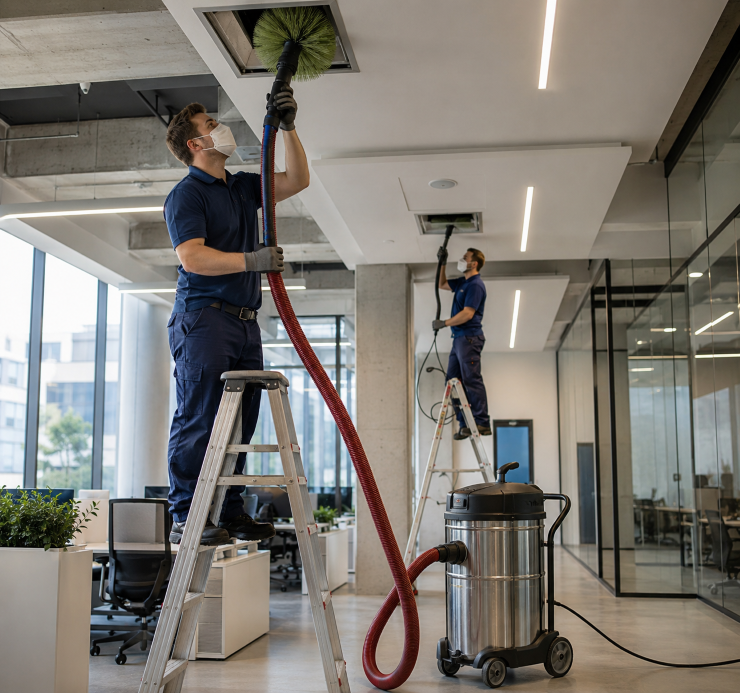
Not all duct cleaning equipment delivers the same results. In a commercial setting, the scale and complexity of the duct system requires commercial-grade equipment, not the same setup used for a small residential job.
For most commercial buildings in the GTA, professional duct cleaning should involve:
Ask the company what equipment they use before booking. The answer tells you a lot about the quality of the service you will receive.
There is no single answer that works for every building. Frequency depends on building type, occupancy, HVAC usage, and what the last inspection found.
A general guide for commercial buildings in Toronto and the GTA:
These are starting points. A proper inspection of your specific system will give you a more accurate recommendation based on actual conditions.
When you book a commercial air duct cleaning service in the GTA, here is what a thorough job should include:
If any of these are not part of the scope, clarify before the work begins.
Reactive duct cleaning, booking a service after problems appear is more disruptive and harder to budget for than a planned schedule.
When commercial duct cleaning is part of your building’s regular maintenance programme, it is easier to coordinate, easier to communicate to tenants, and easier to document over time. The building runs better, tenant satisfaction stays higher, and you spend less time responding to complaints that trace back to the HVAC system.
Universal Duct Cleaning works with property managers across Toronto and the GTA to plan, schedule, and document commercial duct cleaning services with minimal disruption to building operations. If your building is due for a review, we are happy to take a look and give you an honest assessment of where things stand.
Q1: How often should commercial duct cleaning be scheduled in Toronto?
Most commercial buildings in the GTA benefit from a full duct cleaning every two to five years depending on building type and usage. High-traffic spaces, restaurants, and warehouses typically need more frequent attention than standard office buildings.
Q2: Can commercial duct cleaning be done without disrupting tenants?
Yes, a reputable commercial duct cleaning company in Toronto will schedule around your building’s operating hours. After-hours, weekend, and phased scheduling are all standard options for occupied commercial spaces and condo buildings.
Q3: What is the difference between commercial and residential duct cleaning?
Commercial duct cleaning in Toronto covers larger, more complex systems – multiple zones, air handling units, and high-traffic ventilation across an entire building. It requires commercial-grade equipment and experienced technicians. Residential duct cleaning is smaller in scale and scope.
Q4: Is before and after documentation standard with commercial duct cleaning?
It should be. Before and after photos or video confirm the work was completed properly and give property managers a record for their maintenance files. Always ask for documentation as part of the service before you book.
Q5: What equipment should a commercial duct cleaning company use?
Look for portable commercial-grade vacuum systems, rotary brush equipment, and HEPA filtration. This setup creates proper negative pressure across the full duct system and contains fine particles during the cleaning process, essential for occupied commercial buildings in the GTA.
Universal Duct Cleaning serves Toronto, Brampton, Mississauga, Vaughan, and the full GTA. Call for a free quote.
Book a free quote with Universal Duct Cleaning Inc. No pressure, no hidden fees.